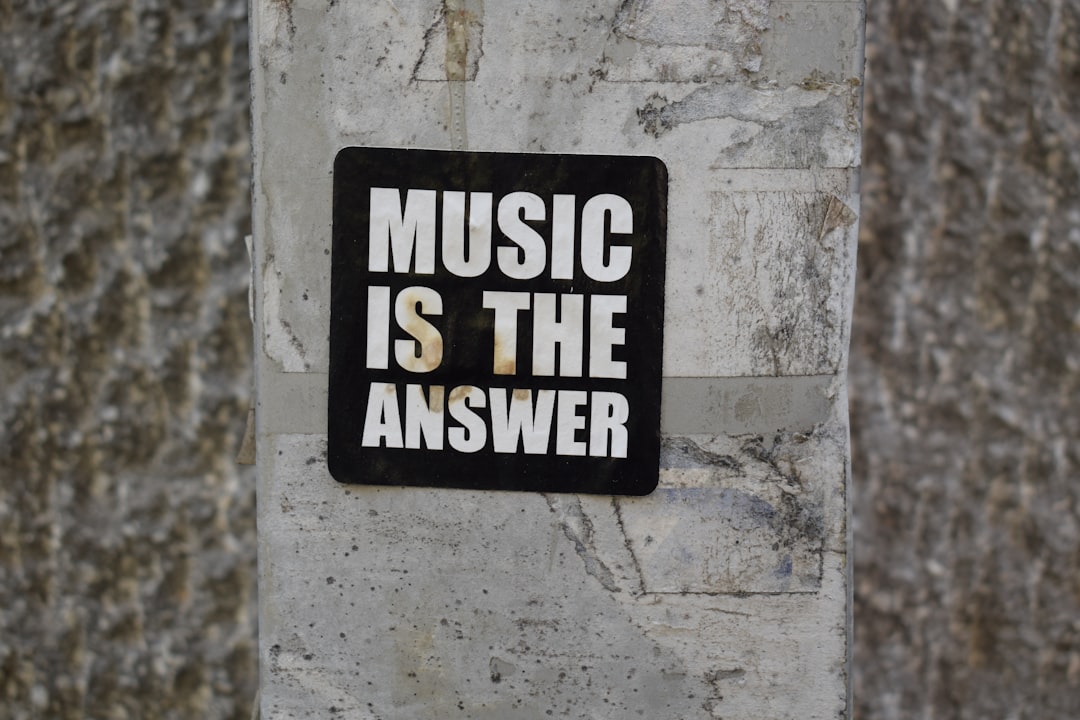
It’s in the air, but there’s more to it!
Vibrating air
We hear music with our ears; sounds combined in patterns that we recognize as music. Part of the recognition element is the foregoing learning process we have been through – we are not born to identify sound patterns as music, it is something we learn.
This means that some people confidently can say that what they hear isn’t music. They hear it as sound, for sure, but consider it to be noise, because it doesn’t follow the patterns they have learned that music should follow.
We can have different genres, signified by certain elements, instruments, or rhythms, and when a new genre appears, it is often as a slight adjustment of an already existing one. Otherwise, it will have a hard time getting recognized as music.
We also hear with the rest of the body. It may not be evident for most people, but the sounds they hear with their ears are only part of the musical impression. We hear with our bones too, so to speak, especially the deeper tones, the bass. And in a sense, we hear with our eyes too: it is often so, today, that a new song becomes famous and popular partly due to the music video that promotes it on TV or video services on the Internet or in the mobile phone.
The total impression of music also includes surroundings, circumstances, and other exterior elements, such as your mood when hearing the music, and the other senses being used, such as taste or muscle reactions. If you dance or eat while listening to music, the music affects you differently than if you read or try to give a speech. In fact, music can promote some other experiences, while it can almost prevent others, as it adds a needed rhythm or mood, or distracts us from what we wanted to say.
So, it’s not only air that vibrates. All of us vibrates with it, and if it resonates with what we have learned to be music, we experience the music, otherwise we experience disturbing noise.
Where it comes from
You don’t need a dedicated musical instrument to make music. Looking objectively at it, “instrument” simply means “tool”, and a tool is something that helps you do what you want to do. In theory, you could push a nail into the wall without using a hammer, but in some cases, the wall is too hard, or you are too soft – whatever the case, you’ll need a tool.
Often, you don’t need a tool. You can fold paper in beautiful origami without using scissors or anything else than your hands. In a way, your hands are then the tools you use. But they are not dedicated tools for making origami, so you wouldn’t call them “origami instruments” or similar.
The same with music. You can whistle, using only your lips, lungs, etc., to produce music. Or you can beat on something with your hands, or tap with your fingers on the table, or whatever you have nearby. Every such auxiliary thing becomes a musical instrument for that moment, but will often not be dedicated for the purpose.
If you use a dedicated musical instrument, it will, in a similar way, just help you make the music. It will not make it for you. Perhaps except for automatic instruments like programmable synthesizers or drum machines, and similar sequencing or random devices that can produce music on its own. Even wind chimes produce music, although unstructured and somewhat random – they have been made by selected lengths of rods, though, to fit a certain harmony, so even that kind of randomness is somewhat controlled.
Most of the time, however, you are the musician, not the instrument. That means, effectively, that you can play any instrument and still get music out of it. A musical instrument can help you do this easier or better, but you are the driving force. The music comes from you.
That’s probably also why we cheer for the musicians, when being at a concert, not their instruments.
Nonetheless, a very large portion of the focus most people have around producing music is directed toward the brands and models of musical instruments, and there is often a constant drive toward getting a better instrument, or indeed to start with ac “beginner’s” instrument, then move to an “intermediate”, a “conservatory model”, and end up with a “professional” instrument. As a professional, you might feel an urge to upgrade to even more expensive instruments now and then.
This focus on the thing, the instrument, may on one side help you keep your interest in making music alive, but on the other side it may steal some of the attention from practicing and the actual playing.
There’s often a social pressure on the musician to follow troop and buy a particular brand, or an instrument in a particular price range, and professionals experience how their audience look at which brand and model of their instrument they are using.
In this social pattern, we shouldn’t forget that the musician creates the music, and that this can happen by the help of any or no instruments. It’s all up to the creativity and skills of the musician, and, if there’s an audience, also up to their recognition of the sounds made as being music.
An instrument often becomes part of your identity, if you are a musician. It means that you may play the classical guitar, first of all, and then produce whatever music is possible with that. Some musicians turn it around, but not many, so that they mainly produce the music they want, and then find and use the instruments they see fit.
If you play in a band or another organized group of people, such as a symphony orchestra, there will be expectations or even expressed rules or requirements by the band manager, to use specific models and colors of instruments, or specific strings, mouthpieces, or whatever may change the exact sound of your instrument. You may still have some freedoms left, for instance to choose the exact brand of instrument, but there can be a requirement that it must be a round-back model, if it is a mandolin, rather than a flat-back, simply because the band manager wants a certain sound, or a certain visual appearance of the band.
This way, a musical instrument becomes something more, and something else than just a tool for making the music: it becomes an expression of style and tone, perhaps, and of a social stance, in some cases, if, for instance, a solid silver flute is required, which will then rule out the musician who can’t afford such one.
The music comes from you, but it is being filtered many times on its way to the listener’s mind, through the social sphere you’re in, the requirements from your surroundings, the expectations from leaders and co-musicians, from the audience, and the exact sounds available to produce by the instrument you end up playing.
Another dimension comes in when playing music that was written by someone else, so that it isn’t your music from the start, but you’ll make it yours, as part of a band, or individually. You’ll then adapt the written music to your skills, your instrument, and your surroundings, so that what comes out of it is a mix of many aspects. This is what makes one performance of a piece different from another, and a good reason to allow yourself to go to a concert, even if it plays works that you have heard before, because every performance will have some of those aspect different, and therefore sound different.
In a sense, music comes from the heart. Someone feels the music and expresses it – through written notes, or through improvisation. But nothing is truly unique when it has to follow patterns of expectations, so music becomes a social phenomenon that is made by that someone from all the inputs and controls that are available.
Music may be just vibrating air, but it can’t vibrate just any way it wants – it must be controlled.
Photo by Marija Zaric on Unsplash