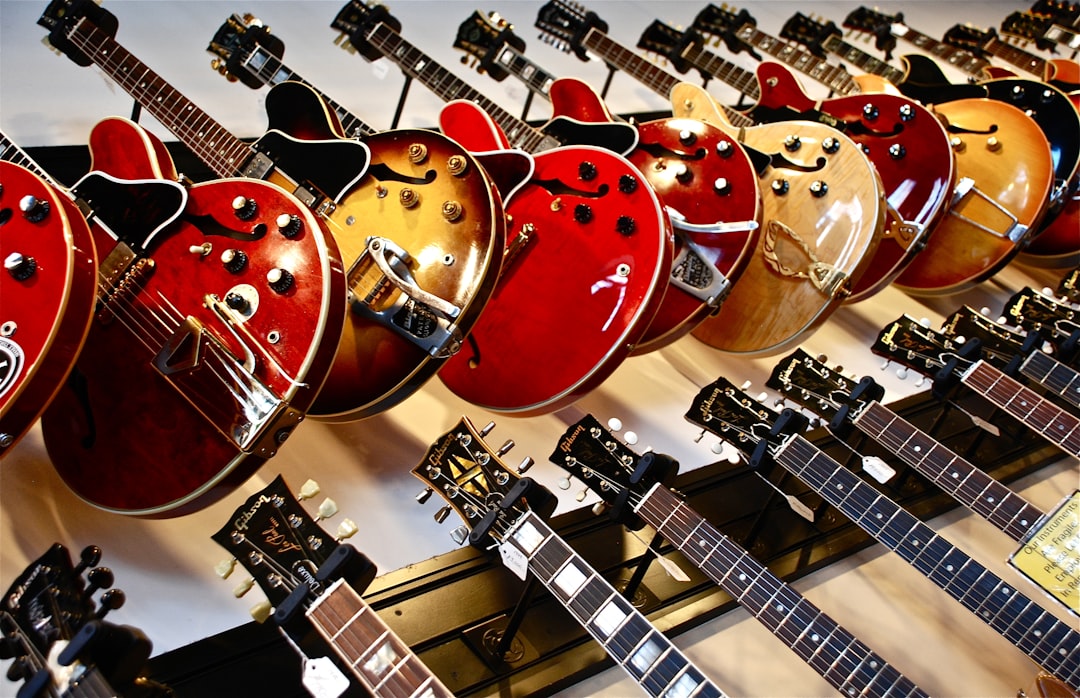
Pick your brand, and it will give you identity
The production of musical instruments shows similarities with other industry items, such as shoes, clothes, refrigerators, and cars.
You’ll be able to find many brands, many production facilities, and often, many combinations of those – meaning that you can’t always count on something of a particular brand being produced in a particular place.
All brand owners make use of the possibilities that an interconnected world of industrial facilities offer them: easy access to ready-made components, for instance, or the complete production of some or all instruments by other manufacturers. Some brands don’t have any production facilities of their own – they are either designing instruments that are then being produced according to the design by third-parties, or they are simply buying ready designs from other manufacturers, just with their own brand logo printed on them. Another variety has become popular: the rental of brand names, so that a manufacturer produces and sell instruments of that brand without actually being the brand owner.
There’s also the other end of the specter, with instruments handmade by individual craftsmen/artisans, often called luthiers, instrument makers, or similar, or small workshops where several such people work together, perhaps with some additional staff present to do some of the trivial, non-artisan work, actually making it a small industrial facility.
And you can find some businesses in the middle of the specter as well, being small industrial manufacturers, perhaps with 20-50 people around, who can actually produce thousands of instruments per year, using somewhat rationalized processes, if not being fully industrial in their ways of working.
Today, there are hardly any of these, no matter the size, who produce everything themselves.
Musical instruments of course contain metals, woods, and other materials, that are bought from other industries, specialized in manufacturing these things. A lumbering company, for instance, cutting down trees and selling them to whole-sellers, the wood industry, who cut the lumber into manageable chunks and sell these to the instrument makers, who then may do the further processing into slices or sticks of wood of the right sizes, or through yet an intermediary, who is specialized in making the exact right pieces of wood for, e.g., violins and guitars.
A similar setup of different companies operate with the metals, and even though the end manufacturer can do a larger or smaller part of the processing themselves, it is most common for such as a flute maker to buy ready-made tubes of metal from a company specialized in making those, and perhaps the keys and other mechanics from yet another specialized manufacturer.
In fact, a flute manufacturer may buy every piece that goes into the flute, plus all the equipment that surrounds it, such as a case and a cleaning rod, etc., from specialized manufacturers of these things, and then just assemble it all as needed.
And similar with other instrument types: it’s possible to buy a ready-made violin body, for instance, and a violin neck, so that these just have to be glued together and some finish applied by the end manufacturer.
Considering the broad use of brand names, it means that you may buy what you think is a good brand, made by skilled instrument makers, but it is then often end-assembled by some others who just put that good brand name on it, and it is even produced from components originating from manufacturers of these, who deliver to all the other brands as well, including some you consider less good.
The value of a brand in such a setting is then mostly mental – you may like your good brand because you think it’s good, but in reality it’s exactly like all the other brands.
If you buy handmade instruments from a smaller facility, such as one of the small workshops mentioned, there’ll be a lot more storytelling around it and you may gain confidence that the handmade parts of the instrument really do make a difference for the sound and playability, or you may get to simply love the unique look and feel of the instrument.
In such a world, prices can vary wildly, and as instruments are produced as industrial products, it is most often seen as beneficial for the manufacturers to sell large amounts, possibly through maintaining several series of products, with different price points, to meet the economical abilities of several customer groups.
One aspect that is used to convince you about the better quality of a series with a higher price point is the exact materials used: some woods are more expensive, hence considered better, and some are rare, which also make them seem better in the eyes of some – and then there are traditions saying that some particular kinds of wood sound better in general, or add certain sound characteristics to the instrument.
All of these material considerations may or may not be scientifically provable, but they do affect the prices as well as musicians’ feelings of instrument quality.
Another aspect is the level of decoration of the instrument. It is probably not likely that some mother-of-pearl inlays on a guitar neck or gold-plated keys on a clarinet will have any influence on the sound, but such details do make the instrument look more expensive and, hence, allow for selling them at a higher price.
The industry, hence, delivers many price levels and many varieties, and if you want to buy a musical instrument, you’ll have to make up your mind where in this large scope of possibilities you see yourself.
A performing musician will often benefit from playing an instrument that is known to be expensive, simply because the audience will notice it and talk about it – the instrument then helps promote the musician’s business.
Studio recording musicians, on the other hand, will often go for somewhat cheaper instruments, if only the musicians can make good sound with them. There isn’t always a possibility to flash expensive instruments used, and then it may be unnecessary to use them instead of the cheaper models.
Hobbyist musicians are often in doubt about what is good. They see the expensive brands and models used by professional musicians, or they may read on a record cover that this amazing sound they hear was produced by a certain brand and model, and that influences their choice. Often, a hobbyist will buy something more expensive than necessary, when considering the sound quality alone, but the mental part of the ownership is also important, and the more expensive instrument, with the mother-of-pearl inlays and the rare wood, makes them feel that they are doing everything in a “semi-professional way”.
Music teachers often follow a path of recommending known, somewhat expensive brands to their students, because they believe that this will cause less trouble for the students, and this way allow these to focus on a problem-free learning process. Some instrument types, such as the oboe, has through the times developed into a set of different instruments, at different levels, so that the student is supposed to start with a relatively simple instrument, and then progress through more and more advanced models. You’ll find most oboe teachers recommending the beginners model for a start, and then a year or two later, ask you to upgrade, because now you have reached the time where you need another key on the instrument. There’s not always any good reason given for not just buying the more advanced instrument from the start – it’s all about traditions, not so much about logic.
Orchestras often have a kind of “dress-code” for instruments, requiring certain models, materials, and even colors, so that if you are going to play in an orchestra, especially a classical orchestra, you’ll be bound to get an instrument that fits these rules. This may be for reasons of obtaining a certain sound of the orchestra in total, or it may be for the ease of conducting certain pieces of music, that, for instance, could require the flutes to be able to play the low B, hence needing a “low B foot-joint”. Other reasons may apply. If you play the violin and aim for a job as the first violinist, you’re chances are probably better if you play a famous old violin, since that will be something to show off for the orchestra, hence, attracting a larger audience.
Industrialization made it possible to introduce trends in the world, to a much larger scale than ever seen before. During the 19th century, for instance, we saw both mandolin orchestras appear and the amount of them explode, over large parts of the world, and this repeating itself several times, because of the initial invention of the mandolin and then additional instruments to make up a full orchestra: the mandola/alto-mandolin, and the mandolin-cello, for instance, which allowed for mandolin orchestras to play a full range of tones, similar to a bowed string-orchestra. The industrialization of the production of the mandolin, together with the inspiration people got from these specialized orchestras that were traveling around and giving popular performances, made many ordinary people both able to buy a mandolin, and interested in doing so.
Similar waves of interest has been seen with the piano, the Spanish guitar, the recorder (flute), and the electric guitar. At times something additional pops up, like the pan flute or other somewhat exotic instruments, and the industry then makes use of it and produces, and sells, a lot of these.
These trends have, hence, caused very many instruments to be sold, of which most, sooner or later, ended up being offered for sale as used instruments – when the original owner bought a new and better one, or simply lost the interest.
This way, the market is today floated with formerly popular instruments in large amounts, available used for a low price, as well as an abundance of new or slightly new currently popular instruments for sale, all kinds, at all prices.
What exactly triggers a trend is a science in itself, but availability is definitely part of it, and musical instruments of many kinds are, thanks to industrialization, available to almost everybody who would like to have one. Different prices and models, the possibility to buy a used one for less, and the many people around who know something about how to play, so that it’s possible to learn from them, has all made musical instruments a kind of product that almost everybody on the planet can own, if they want.
This way, definitely similar to shoes, clothes, refrigerators, and cars.
And even if you don’t own one yourself, chances are that you can either borrow one from a friend, play one in a place you have access to, such as a school or a café, where they may have an old piano – or you can make an instrument yourself, to start with. The simplest one possibly just by shaping your lips and tongue in a certain way and then blowing air through this human whistle.
Industrial instruments add a flair of “correctness” to your music production, and just as with all other industrial items, quite a lot of value lives in the imagination only, amplified by the brand name on the product.
Next to the instrument itself, you can of course buy a lot of accessories. Many instruments need them, for instance new strings now and then for a guitar, or reeds for a saxophone, and many instruments also need parts for maintenance and repair, such as new pads for that saxophone, but the industry for musical instrument accessories is much larger than that! Bags, cases, straps, and other practical things are supplemented with special chemicals for cleaning, various products to help you tuning or practicing, or recording… the list is endless.
The musical instruments industry, and the industries producing the accessories and consumables, make sure that you can keep buying things forever. Like so many other industries.
However, if you choose to do so, you can probably buy a cheap, used instrument, and keep playing it with all needed maintenance done by yourself, using whatever tools and materials you have. That’s how it’s done in some parts of the world that are less exposed to industrialization, and also, it was the typical approach to music in the rest of the world before modern times.
But today, playing music is about more than making the sounds – it’s about being part of a trend, part of an environment and a group of people in society. Part of an identity. And the industry produces all the remedies you need for that.
Photo by Susan Mohr on Unsplash