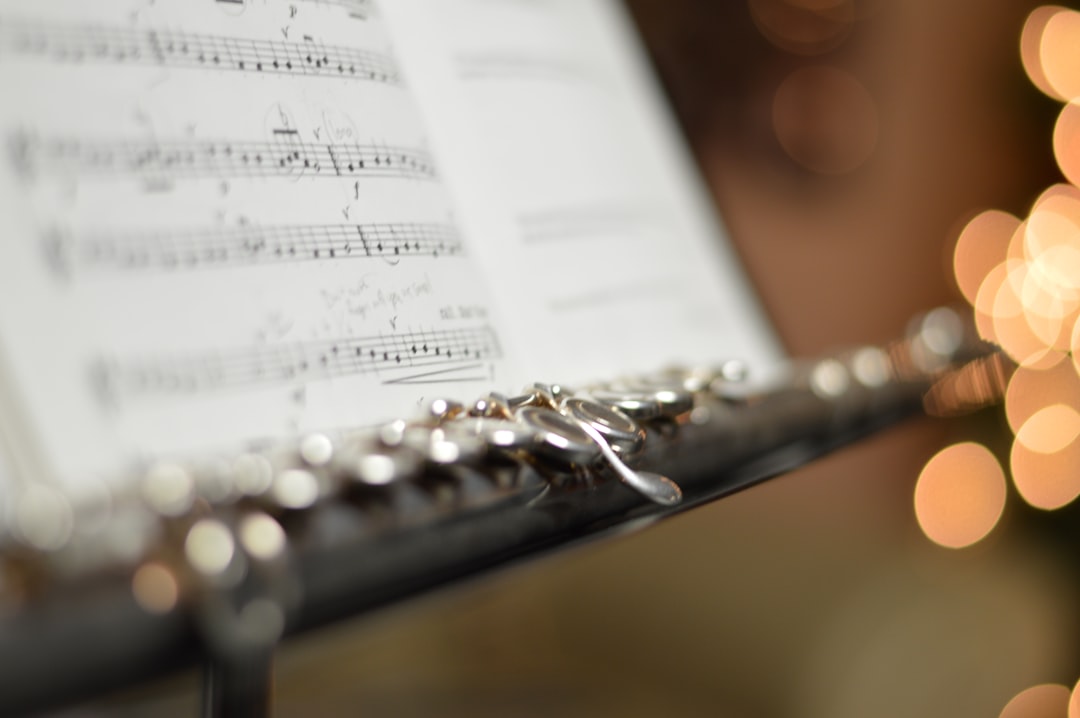
That image of just starting out with an old guitar found in a second hand shop or in the attics isn’t true
There are several entry points into the world of playing music.
Many start as children, and I guess that almost every successful musician did that. But others start later, wanting it to become a hobby or something next to other skills. At times, friends or family inspire to begin playing, and growing up in a home with a piano typically means that people will get to know how to play something, even if they never get qualified education – which many of them do, actually.
You can learn music on the street. A friend has a guitar and lets you play it now and then, and this way you’ll develop a comfortable feeling with the instrument. Maybe some day you can get your own guitar, and from there, it can go forward quickly, and you can become a master of the instrument, even without ever taking a lesson.
Many of us have that romantic dream of just starting, and then we become good. After all, how hard can it be? A guitar has six strings and a size that can easily be handled by an adult person, so it should be possible to learn. And certainly, there are books, websites, and many other resources to learn from, so all you need is to buy a guitar and then start.
Only, which guitar? You know nothing about guitars and have no friends who play one, so you decide to look for advice online. It is easy to get input – a quick search on Google for “which guitar should I buy” will show a long list of websites and videos that can help to make the decision. And you’ll run into forums as well, and both shops and guitar teachers who give advice.
When you then walk through these sources of information, you’ll notice some advice that is repeatedly mentioned:
- Go into a guitar shop and try out all the guitars, then buy the one you like the most
- Buy this specific brand
- Don’t buy those specific brands
- Buy this kind of guitar (acoustic, classic, electrical, etc.)
- Buy one that costs at least $$$, as everything below that is crap
- Don’t buy a guitar, rent one
- Bring a guitar-playing friend to a shop and let him help you choose
- Bring your guitar teacher to a shop and let him check if the guitars you like are good
- Don’t buy a used guitar, always a new one
- Buy only from a good shop
- Etc.
What is characteristic for all such advice is that you are expected to be in a situation where you have enough money, you have friends, even some who can and are willing to help you, and you have a guitar teacher who will spend time helping you buy an instrument.
It is also typical that people sort vendors and models into good and bad, and that the low-cost products are considered no-go, while a few reputable brands and models are seen as great for beginners.
Nobody will ever advice you to buy a cheap, second hand instruments, or look in the attics to see if something is hiding there. They don’t see any attraction in such a start on a music hobby, so you shouldn’t either, they seem to think.
And it is typical that more expensive is considered better – on a linear scale. For a flute, the amount of silver is a thought quality factor, even though it evidently doesn’t influence the sound. The price tag itself seems to be seen as a quality factor.
Music teachers and professional musicians often have a suggestion for you, when giving their advice, that is based on their relation to quality. They have themselves instruments that cost as much as a car or a small house, and everything less than that will, at best, give you a useful beginners instrument but will not bring you that prestige that seems to matter for them, more than the music.
Very many people do not feel helped by such advice.
If you want to play an instrument, you’ll probably look around for different instruments for sale, and you will not start with the most expensive. You will find some cheap ones, and even they may set you back a lot more than you had hoped for, or can afford, so when the advisors insist that you must step up even further from that price level, it can end your dream.
For some types of instruments, this has escalated into the absurd. Take the flute. The transverse flute, which is probably one of the most common instruments, and also an old one that has found its way into different musical contexts during several centuries.
You can get a new one, with a bunch of accessories, for around 100 €, or you can buy one made of solid gold for 50,000 €. There is everything in between on the market, and many brands. Logic says that there wouldn’t be many brands and price levels if everybody would buy the same brands at the same price. But it is, nevertheless, the advice you’ll get when asking in forums: Buy a Yamaha YFL 212 (or some other model from that series). It costs around 700–800 €.1
Some will insist that this model will get you started, but you’ll then soon need to upgrade to a bigger model from Yamaha, costing twice as much, and later again a couple of times, until you end with 4–5,000 € for a professional model, which then may be from a different brand.
I just watched a couple of videos on YouTube where two professional flute players tested a $69 flute from Amazon up against their normal instrument, costing $9,000 and $50,000, respectively.
That’s what you’ll see all the time: people flashing their expensive instruments. And they will insist that the flute should be from solid silver or gold in order to be useful for playing in, say, a symphony orchestra. So, this kind of demonstrations will leave you with a feeling that even if you start with less, you have to keep pouring in money on increasingly expensive instruments – or chicken out and admit that you are not on their social level.
Because, that’s what it’s all about. The flute isn’t for playing music, it’s for showing status. Even the $69 flute plays excellently, and if you can spend a bit more, you’ll probably be able to find one that can do that consistently, being more solid and durable than the cheapest model. Of course, some instruments will have better mechanics than others, but that’s not solely a matter of how much you pay, and you can find low-cost instruments with good mechanics. They are not made out of solid silver, but the funny thing is – there’s no evidence that you can actually hear if the flute is from silver or not.
But then you run into the next problem. You find your low-cost but great flute, and then it needs service. Either something needs adjustment, or something breaks, or it is simply time to go and have the pads changed (they make the buttons close the holes tight, but wears out after some years). And no repair shop will do it!
Every instrument service and repair shop has a black list of brands they don’t want to service. They’ll claim that these brands have no available spare parts, but you can buy new pads and other parts everywhere on the internet, so these shops should be able to do that too, shouldn’t they?
But no, they refuse, and if you can’t do the service yourself, you’ll find that your flute becomes worthless. You can, of course, sell it cheaply on an online marketplace, but most of the investment will be lost.
The supported brands by the repair shops are, not surprisingly, the more expensive ones. And perhaps it’s needed. I just checked service packages and prices in the area where I live: Malmö, Sweden, and they in general need 8 hours of workshop time for changing the pads! An hour costs about 100 €, and the pads can be bought in some shops as a set (for the mentioned Yamaha YFL 212) for around 60 €, making the whole repair cost about 860 €. A new flute is cheaper!
Other services, such as a “total service” where the flute is completely separated, polished, etc., and getting new pads and cork (for the joint between two pieces), and this is calculated to take 25 hours. I would have thought that you could build a new flute from scratch in that time.
They have a 2-3 hour service package that they advise you to have done once every year – that’s a service fee of 300 € plus parts, which is comparable to what I pay for having my car serviced. And it comes with a catch: they’ll do at most one pad change (charging 25 € for the pad itself) as part of this package, and if more is needed, they’ll sell you a bigger service package instead.
It seems obvious, that if you want to play the flute, you’ll have to buy into an ecosystem for the wealthy. There is no room for $69 instruments in that concept, so everybody in the system will advise against those.
Basically, if you somehow manage to keep your first 800 € Yamaha-flute for 5 years, the total costs will be:
Flute purchase #:  800 €
Small service x 3: 900 €
Parts, estimated:  200 €
Accessories *:     300 €
------------------------
Total:           2,200 €
------------------------

# It is assumed that the instrument comes with an initial setup, otherwise another 1-200 € should be added.

* Accessories include such as a bag, cleaning brushes and cloths, etc., and can easily end up costing more.
To that, the payments for the teacher, books, bus tickets, and what else you’ll need along the way to keep up this hobby. And after the five years, a new cycle begins, with a more expensive instrument.
It is likely that you’ll replace the flute with more and more expensive models already within the first five years, and hence, this is really just a minimum price level, based on the advice from music teachers and other professionals.
Many of them will even advise you to not buy a used flute, which is probably why these are so inexpensive on the marketplaces, as the service costs are expected to be higher than the value of the flute.
An instrument like an oboe, or a bassoon, has an even more grotesque price level on all parameters, except that here the instrument is so expensive that it most often does have a resale value. On the other hand, such instruments need reeds, and some other instruments need strings, for instance, so there is often a regular cost for consumables.
Most music teachers, shops, and professional musicians can be pushed to “accept” that you buy something slightly less expensive, but it changes the total costs only by a tiny bit, as most of the total calculation comes from other expenses than the purchase cost for the flute itself.
Oh, and it should be mentioned that many parents are eager to show off when buying instruments for their children: they give 6-7 years-olds an instrument costing a thousand euros or more, and replace it as often as the teacher says so. And many of these parents will buy an extra expensive instrument, better than needed, just so that their child can show it to the other children and this way display the social status.
This part is quite absurd, given that children often don’t care about the price, they just like “the red one” or similar, and it would make much more sense to buy something the child enjoys than something that shows off the parent’s wealth – and of course, some parents can’t afford the expensive buying competition and may end up pulling their child out of the game completely, forbidding it to take lessons.
You can pay some shops for changing strings on your guitar, or other small tasks, such as “setting up” the instrument (adjusting it so that it plays well). A typical price range in my neighborhood is 20-50 € for changing strings (depending on the number of them) plus the price of strings themselves, and 100 € for a simple setup of a guitar. They have bigger packages as well, costing up to 350 € for a setup.
Luckily, for most people who play as a hobby, that setup needs to be done only once, when you get the instrument, and it will probably last for many years after that. Only, remember that they are not working with just any brand, so you must buy an instrument of a certain price level to even be able to buy that service.
Strings, you can change yourself. Many other services can also be done by yourself. Also the setup. The technicians who want 100 € per hour, and the music teachers, will insist on ordinary people not being able to do anything, but the fact is – you mostly don’t need the expensive services if you are willing to set aside a bit of time to learn how to do it. As a flute player, you would benefit from being able to change pads, for instance, or lubricating the mechanics. Or you could do what some are suggesting on the internet: simply buy a cheap instrument and then throw it away and buy a new one, if it breaks in any way, or simply when it needs service.
Doing things yourself will exclude you from that elite world of big spenders, that is the world of musical instruments, and the status that comes with it.
But at least, you’ll be able to enjoy playing the music without getting ruined. And, who knows, maybe you can find people who think like you and have a communication with them based on the joy of playing, rather than the joy of paying.
It is worth noticing that by far most of the communication in the forums on the internet are about buying things, about brands and models – much less is about playing the music and what that makes you feel. People seem to be caught in that death-trap of spending, not really bringing their soul into the music, only their wallet.
1 Prices have escalated during the last few years. From reviews of instruments, mentioning the purchase prices during times, I can see that many instruments have seen price increases of about 50% during the last four years, and also an increase during the previous four years, perhaps at a similar level (I have limited data from that long ago, so it may be more or less). Such a Yamaha flute costed about 500-550 € four years ago, with the European level of sales tax, versus around 700-800 € today for the most common varieties of the 212-model. A similar development can be seen for almost all musical instruments, also the $69 models, which are now closer to $100.
Photo by Rajesh Kavasseri on Unsplash