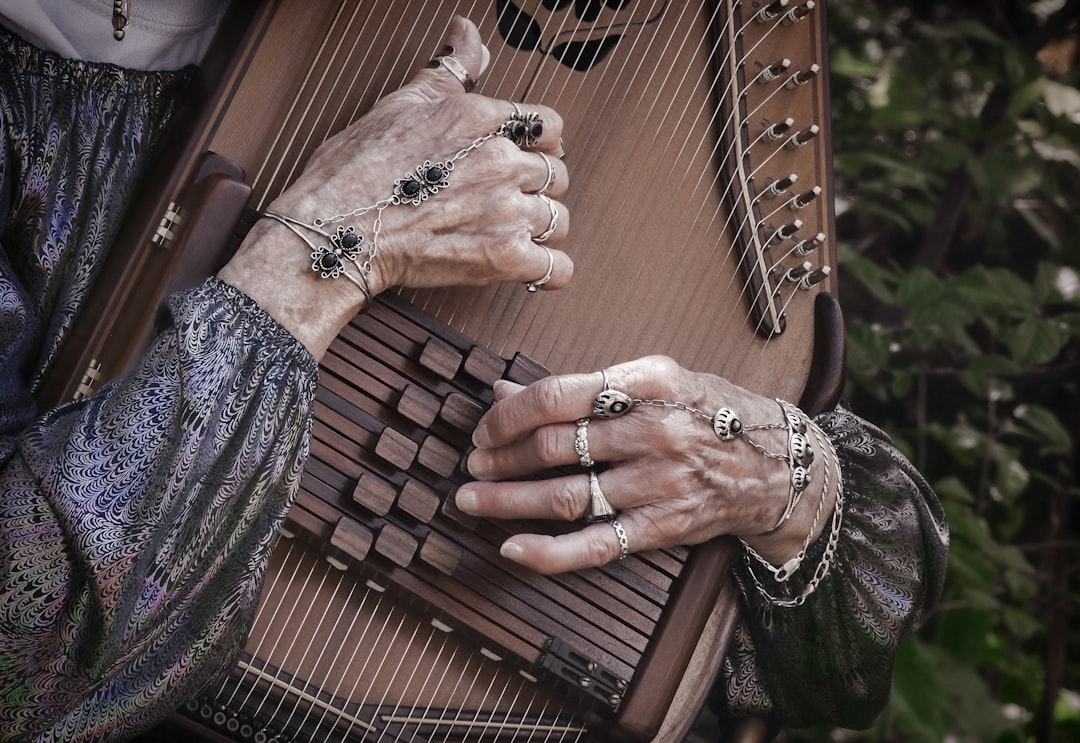
Many people believe that playing an instrument can be learned only by children
No, it isn’t too late! Not at all. Every person on the planet, no matter the age, can learn how to play music.
There are different instruments, and some may fit better than others, for whatever reason. Some types of flutes, for instance, require big hands to be able to cover all the holes – and if you don’t have that, you simply need to pick a different instrument. There can be other considerations, but you will for sure be able to find something that fits you.
Babies like to beat things with other things, thereby making sound. Or shout loud when in a tunnel, to hear the echo. Almost everybody, at any age, will at times hum or whistle a tune, or even just a few tones, but it is all some kind of music. And of course, you can learn how to “tame” this a bit, to make it sound interesting for others. And that’s then music. You may not even need an instrument, but it can help you play more different tones, or play them louder, or with different characteristics. But the human voice is also an instrument, so learning to sing is also an option.
Just think about what music you like to hear, and then you can probably easily imagine how you could possibly contribute to make it.
When hearing about child prodigies and even just ordinary people who play music, it often seems like you have to start as a child to become a musician.
You can ask young musicians who are just forming bands and who do play their instruments well but still feel slightly socially insecure, because it is all somewhat overwhelming for them. Or maybe they are not insecure, feeling that they have done so much work to get there, that they are now real talents who fit in. No matter who you ask in this segment, you’ll probably be told that yes, it’s too late for you – you should have started as a child, and now, if you’re an adult or even a teenager, who hasn’t played music before, there’ll just not be enough time left in your life to become good at it.
Music teachers will probably be happy to teach you, but you’ll not be in the front line of candidates to join the band they have put together, both for their students to learn how to play in a band, but also to showcase the teacher’s skills to the world.
So, there is a tendency to see music playing as something for those who begin very young and can be dragged fully into that world, thereby putting lots of hours of practice into the music, while staying away from other distractions.
Some music academies even have age restrictions, such as 30 years of age, for potential admission. And most of their students are indeed much younger than that.
It is not unique to music, btw., as other studies also tend to see older students as mostly a burden, and we could even expand this kind of thinking to the whole society that is often focused on attracting young people to jobs, studies, and everything else.
But all this is wrong!
Some of this “child learning music” thinking is a result of a tradition through a couple of hundred years, when children of people who were better off were supposed to be brought up with some social skills, including the ability to play music. Connecting music-learning with being brought up thereby became obvious for many people, even though it was actually just a social convention.
The idea of children being better at learning anything is not based on science, as, in fact, several scientific studies have shown how the brain of an adult is just as capable of learning new things as the brain of a child.
Adult learners of anything often learn faster, because they have learned during life to plan, prioritize, and concentrate. When teaching children, there will be some first years when the attention of the child will be divided between many things, and the effective progression isn’t that big. It might look so when seeing it in retrospect, when the child has become a teenager and has played the violin for 10 years already, but you could probably get further during the first year or two than these children got during their first year or two.
It depends on your life situation, mostly. If you can dedicate yourself to the needed amount of practice and playing, and if you don’t have other obligations that will drag you away from it, you can see great progression quickly.
Many adults, though, see how their surroundings are not taking them seriously, until they have reached a “surprisingly” good level. When you can treat your surroundings with a musical performance they’ll like and didn’t expect you to be able to, they might start accepting you as a musician. Until then, it can be difficult to get their support, or even their acceptance for you to spend time and energy on it.
It is probably good if you can get into surroundings that indeed will support you. A club of friends who agree to start playing as an Irish band, or whatever your interests can find as a common ground, and then simply start meeting, playing, and encouraging each other.
You can also look around for a music teacher who displays an attitude suitable for you, such as “of course you can become good at this – I’ll be happy to help you get there!”
But you should also consider what becoming good actually means to you: You may never get to play in a symphony orchestra or a famous rock band, so perhaps the skills needed for fitting into such contexts are not what you’re after.
The very basic elements of playing music can definitely be learned by most people in a short time, and it gets slightly more demanding after that, requiring more time to practice and some efforts to learn additional theory and skills, so your task when getting into this is simply to decide, how far you want this to get, for you to feel that it was successful. And don’t worry: you can adjust your ambitions at any time – it’s your hobby, so you decide!
No matter what you do: if you want to learn music, you must spend time on it regularly. You simply get out of shape if you allow yourself to get away from practicing during longer periods. It’s a bit like physical training, where you’ll develop a more relaxed shape, not maintain the sportive you, if you never do exercises.
Set aside time each day, if possible, or at least a couple of times per week. Make sure that you really have the time, because you won’t learn anything at all at your practice sessions if you’re distracted and feel that you really should be somewhere else, doing something different. It’s not very important how much time you set aside for each session – just do what’s possible, and you’ll along the way develop some routines that fit the possibilities.
So, that’s the way forward if you are going to learn playing: find spaces in your calendar, regularly, where you are free to practice, and then just make sure to do it.
And as soon as you can, when you, after just a few days or weeks, have learned the basic technical skills to being able to play sounds on the instrument, get into a joint mode of playing and practicing. Make sure that you actually play real music, only adding something new to it regularly, so that you will learn.
Don’t get caught in practicing scales forever, even though it is useful to know those by heart. Also, don’t get into the habit of just playing what you already know by heart. Make a mix of known and new. Make sure that it’s fun, and accept that you can play real music even before you know all the scales and other technical stuff. Find the right mix of playing and practicing that will keep you going. And if at all possible, see if you can find someone or some people with who you can share that hobby, so that you can meet and practice or play together. That’s where the real fun – and the real learning – begins.
You’ll find advice on the Internet and from friends on learning to read notes – with some people insisting that it’s necessary for playing, and others that nobody need notes. Both sentiments are true and false at the same time. It simply depends on your situation. In an orchestra, you really would be lost without note-reading skills, but in a jazz band, nobody needs them, because you choose what to play on a different basis.
Just be aware that if you can find the quite limited time it takes to get a basic knowledge of notes and how to read them, how to use them as a starting point for playing, it will probably be nice for you in many situations thereafter. But you can also start by prioritizing training your ears, so that you can play what you hear, and your sense of improvisation, so that you can play something completely unique as you go.
Chances are, that you will learn all of it along the way, but not all of it on the first day of your new hobby. It all takes time, and some people find that the time spent on learning, is the real joy of the hobby – this constant challenge you’ll find yourself in when starting out wanting to play something new, such as a new tune, and then beginning without any skills in it, but gradually moving towards mastery.
Part of the magic is that you’ll soon find yourself being able to learn a new tune in a matter of hours or even minutes! Hard to believe if you don’t already play, but it’s true, you will get there, if only you allow yourself some time to get started, and then keep practicing and playing regularly.
Most music in the world is played by people who learned it this way. Very few were child prodigies, and a minority of musicians are playing in symphony orchestras. By far, most musicians are ordinary people who just decided to learn how to play an instrument, and then continued to have fun doing that. You can do that too.
Photo by Robert Zunikoff on Unsplash